Rules
What Can and Cannot Go in a Dumpster: The Minnesota List
Minnesota bans more material from landfill disposal than most states, and the list is longer than people expect. Here is what goes in, what is banned outright, and where the rest has to go.
The short version
If it came out of a building or a household and it is solid, non-hazardous and not on a state ban list, it can almost certainly go in the container.
The complication in Minnesota is that the ban list is longer than in most states. Several categories that people assume are ordinary trash — yard waste, appliances, electronics, tyres — are prohibited from landfill disposal by state law, not just by company policy. Knowing that before you load saves both of us a problem.
What you can put in
Household and furniture
Sofas, armchairs, beds, mattresses and box springs, tables, wardrobes, bookcases, desks, carpets, rugs, curtains, clothing, linens, toys, books, paperwork, kitchenware, patio furniture, grills with the propane tank removed, exercise equipment and general clutter. There is no mattress surcharge on our containers.
Construction and renovation debris
Drywall, plaster, lath, timber, plywood and sheet goods, doors, windows, trim, kitchen cabinets, countertops, tiling, laminate, hardwood and vinyl flooring, insulation, siding, soffit and fascia, guttering, deck timber, and general non-hazardous building material.
Roofing
Asphalt shingle in both three-tab and architectural, metal panels, felt and synthetic underlayment, ice-and-water shield, flashing, drip edge, ridge vents and roof decking. Weight is the constraint here, not acceptability — see the roofing sizing guide.
Heavy and inert material
Concrete, block, brick, pavers, stone, rubble, ceramic and porcelain tile and clean asphalt. All fine, all heavy — these belong in a 10 yard.
Scrap metal
Ductwork, conduit, steel studs, railings, bicycles and general metal. Worth separating if there is enough of it, because it is often worth money rather than costing it.
Minnesota's banned list
These are prohibited from ordinary landfill disposal under Minnesota law. This is not a company preference and no hauler in the state can take them.
- Yard and tree waste — banned outright. Grass, leaves, brush and branches must be composted or taken to a yard waste site, never landfilled. See the yard waste guide, because this one surprises almost everybody.
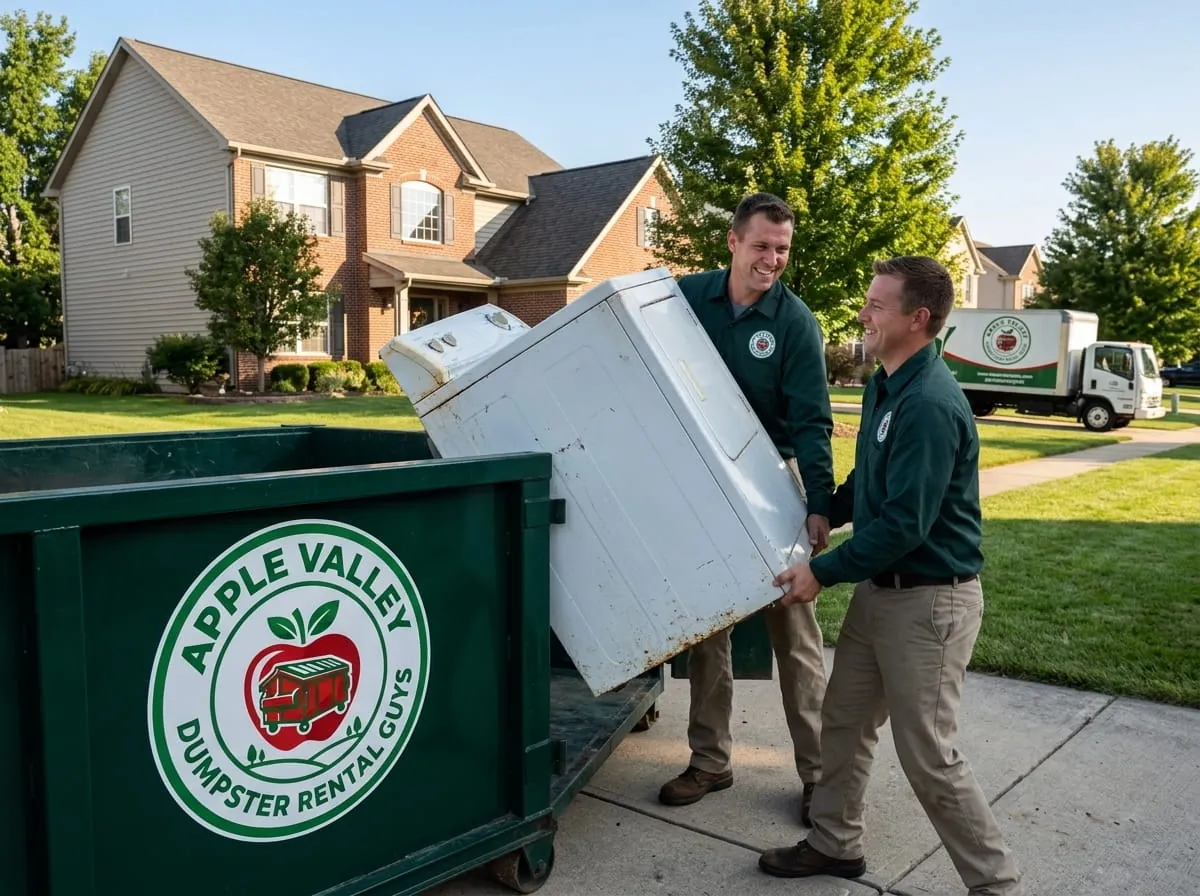
- Major appliances — washers, dryers, ovens, dishwashers, water heaters, fridges, freezers, air conditioners
- Waste tyres
- Lead-acid batteries, and rechargeable or non-removable battery packs
- Motor oil, oil filters and vehicle fluids
- Computer monitors and televisions
- All mercury-containing items — fluorescent tubes, compact fluorescents, high-intensity discharge lamps, thermostats and mercury switches
- Lead paint waste
- CFC refrigerants and equipment still charged with them
- Telephone books
On top of the state list, the ordinary hazardous categories are prohibited everywhere: liquids of any kind including paint, solvents and fuels; propane and pressurised cylinders including "empty" ones; pesticides and pool chemicals; asbestos-containing material; medical and infectious waste; and hot ashes or anything smouldering.
The grey areas people ask about
Paint cans
Liquid paint of any kind is prohibited. Fully dried-out latex paint with the lid off is generally acceptable. Dry it with hardener or cat litter. Oil-based paint is hazardous regardless of whether it has dried — that goes to the county.
Appliances
Banned from landfill in Minnesota, so they cannot go in the container. Most metal recyclers and several retailers take them, and some haulers run a separate appliance collection. Ask us and we will point you at the right route.
Treated timber
Acceptable in a mixed load. Not acceptable in a clean-wood container. That distinction matters here because deck timber is nearly always treated, and deck replacement is one of the most common jobs we take.
Mattresses
Perfectly acceptable, no surcharge from us. They are bulky rather than heavy, so factor that into sizing.
Bagged material
Fine, and it helps with loose debris. But do not bag anything you would not put in loose — an inspector at the facility may open bags.
Snow and ice
Not something you should be deliberately loading. An open container through a Minnesota winter accumulates real weight in snow, and you pay for it by the ton. Cover it.
Where to take what we cannot accept
| Material | Where it goes |
|---|---|
| Paint, solvents, garden and pool chemicals | The Recycling Zone, Dodd Road, Eagan |
| Electronics, monitors, TVs | The Recycling Zone or a dedicated e-waste recycler |
| Fluorescent tubes and CFLs | The Recycling Zone - mercury-containing, banned from landfill |
| Major appliances | Scrap metal recyclers; some retailers take them on delivery |
| Yard and tree waste | A yard waste or compost site - never landfill |
| Tyres | Tyre retailers and dedicated collection points |
| Vehicle batteries and oil | Most auto parts retailers take them back |
| Asbestos | Licensed abatement contractor only |
| Propane cylinders | Exchange programmes at hardware and grocery retailers |
The Recycling Zone on Dodd Road in Eagan is the Dakota County household hazardous waste and recycling facility, and it is free for county residents. It is genuinely the answer to most of this list. If you live in Scott, Hennepin or Rice County you have equivalent facilities run by your own county — worth checking before you drive to Eagan.
What happens if banned material turns up
Loads are inspected at the receiving facility. If prohibited material is identified, one of three things happens: the item is pulled and specially handled at cost, the load is rejected and returned, or the facility levies a charge which is passed on.
None of those are good outcomes and all cost more than a phone call would have. If you are looking at something and wondering, that wondering is the signal to ask.
Loading rules that are not about material
Do not load above the top rail. An overfilled container cannot lawfully be hauled. If we arrive to one loaded above the fill line, we cannot take it until material comes off, and a return trip may be chargeable.
Distribute the weight. Heavy material spread across the floor rather than piled at one end. A load concentrated at the rear makes the container difficult and occasionally unsafe to winch onto the truck.
Keep the weather out. Rain adds weight. Snow adds weight and then freezes the load to the container, which is a genuine problem in January — a frozen load will not tip, and that becomes a wasted trip for both of us.
A pre-load checklist
- Walk the pile and pull out anything liquid, pressurised or chemical
- Set aside anything on the Minnesota ban list — appliances, electronics, tubes, tyres, yard waste
- If the building predates 1980 and you are disturbing floor tile, mastic or pipe insulation, stop and get it tested
- Set aside scrap metal if there is enough to be worth it
- Check pockets, drawers, tins and books before furniture goes in
- Load flat and heavy first, bulky on top, and stop at the rail
- Cover it if snow or rain is forecast
Work through that and the load goes through the gate without a second glance. If anything on your pile has you hesitating, call before it goes in.
Need a container in Apple Valley?
Call and describe the job. Three minutes on the phone gets you a size recommendation, a flat rate and a delivery window — and we will tell you if a smaller, cheaper container is the right answer.
Call (952) 243-4546