Permits
Do You Need a Permit for a Dumpster in Apple Valley?
The short answer is usually no. The longer answer involves city limits, four different counties, and a winter parking rule that catches people out every single year.
The short answer
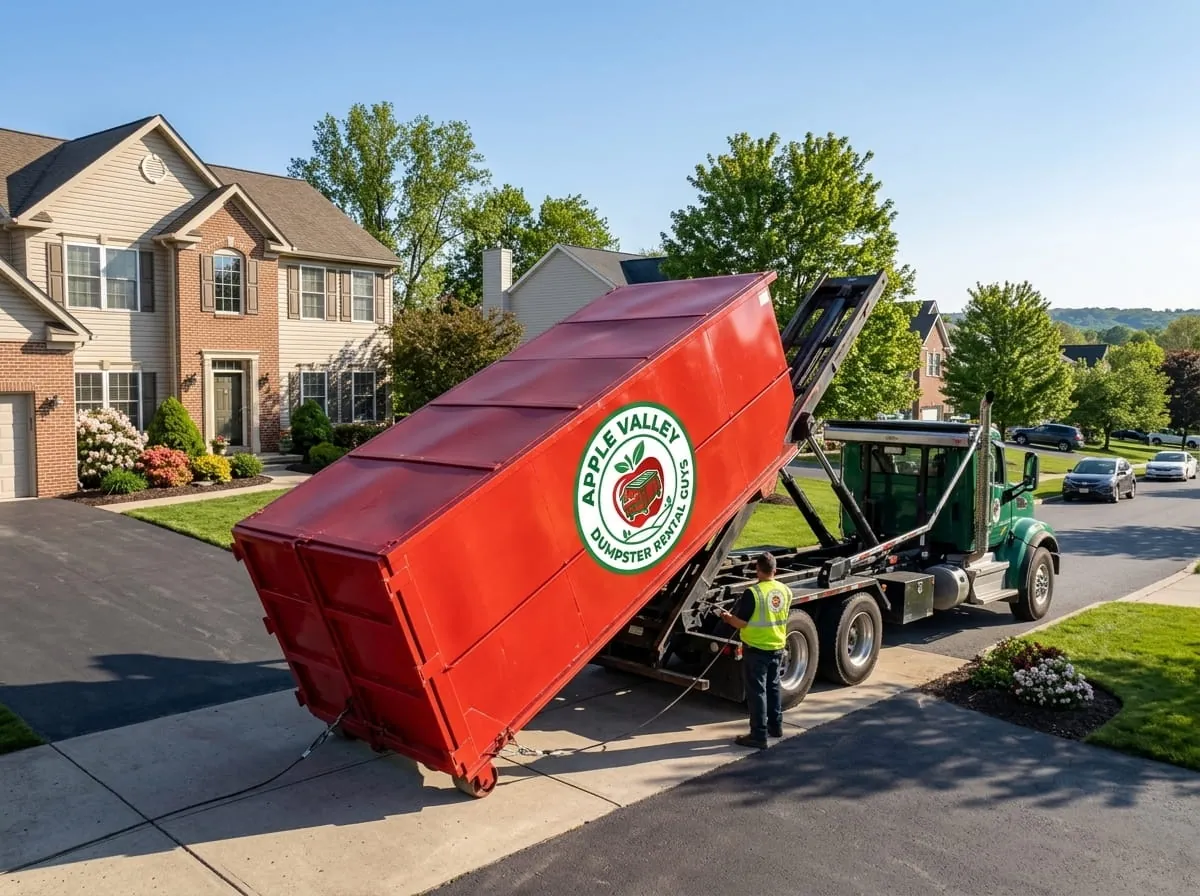
If your dumpster is going on your own driveway or your own private property, you almost certainly do not need a permit. That covers the overwhelming majority of the containers we place.
If it has to sit on a public street, you will need one — and which office issues it depends on where you are, which in our service area means four different counties and well over a dozen cities.
Private property: no permit
A driveway, a private parking area, a fenced construction site, a commercial lot you own or lease — all private property, no municipal permit required for the container itself.
Two caveats that are not permits but function like them:
- The underlying work may need a permit. Roofing, structural demolition, electrical, plumbing, additions and exterior alterations generally do. In Apple Valley that is the city's building inspections department. The dumpster is the easy part; sort the building permit first.
- Your association may have rules. Private covenants rather than law, but enforceable.
Public street: yes, permit
Placing a container in the street means occupying public space, and every city we work in regulates that. The permit exists for sensible reasons: emergency vehicle access, sight lines at junctions, and making sure the container is reflectorised and visible at night — which matters more than usual here, given how early it gets dark from November through February.
Typical conditions include a defined duration, reflective markings, and a minimum distance from intersections and hydrants. Our honest advice: if there is any way to get the container onto private property, do that. Street placement is a last resort, and in winter it is a genuinely bad idea for reasons covered below.
The four-county problem
This is the bit that catches people out, and it is specific to where we work.
A homeowner in Apple Valley calls the City of Apple Valley. Someone in Savage calls the City of Savage or Scott County. Someone in Bloomington calls the City of Bloomington in Hennepin County. Someone in Northfield calls the City of Northfield in Rice County. Same container, same company delivering it, four different jurisdictions.
The county line matters for one other thing worth knowing: the household hazardous waste facility. The Recycling Zone in Eagan is a Dakota County facility for Dakota County residents. If you live in Savage, Bloomington or Northfield, you are served by your own county's arrangements instead. People drive to Eagan with a car full of paint and discover this at the gate.
Who to call, depending on where you are
| Where the property is | Who to approach |
|---|---|
| Apple Valley | City of Apple Valley |
| Burnsville, Eagan, Lakeville, Rosemount, Farmington, Hastings and the rest of Dakota County | The relevant city; Dakota County for unincorporated areas |
| Savage, Prior Lake, Shakopee | The city, or Scott County |
| Bloomington, Eden Prairie, Richfield | The city, or Hennepin County |
| Northfield | City of Northfield, or Rice County |
If you are not sure which side of a line you are on, call us with the address. We work across all of it and can usually tell you immediately — and if we cannot, we will say so rather than guess.
The winter parking trap
This one is worth its own section because it catches somebody out every single winter.
Most Minnesota cities operate seasonal parking restrictions through the snow season, and declare snow emergencies after significant snowfall. During those, vehicles and obstructions have to be off the street so the plows can get through. A roll-off container sitting at the curb is an obstruction, and it will not move itself.
The consequences range from a ticket to the container being in the way of a plow, which nobody wants. Rules vary by city — some restrict overnight street parking all winter regardless of snowfall, others only during a declared emergency.
What this means practically: from roughly November through March, plan on the driveway, not the street. If your job genuinely cannot use the driveway, talk to us and to your city before you book, not after the snow starts.
HOA and association rules
In the newer developments — the growth corridors in Lakeville, the Eden Prairie neighbourhoods, newer Rosemount and Farmington — the association often matters more in practice than the city, because almost nothing we do needs a city permit but plenty of it happens inside deed-restricted neighbourhoods.
The themes are consistent: containers on the driveway rather than the street, removed promptly on completion, load kept below the rail, and site kept tidy. Some associations want advance notice. None of that stops you renting a container — it just means a short conversation before delivery day, which is far easier than a violation letter afterwards.
What we need from you
When you call, tell us:
- Whether the container is going on private property or the street
- Which city the address is in
- Whether you are in a deed-restricted development
- Whether the underlying work is permitted, if it needs to be
- In winter, whether the driveway will be cleared
If street placement turns out to be necessary, we will tell you which office to approach and what they typically ask for. We cannot pull the permit on your behalf — it attaches to the property owner or contractor — but we can make sure you are asking the right authority first time, which across four counties is worth something.
Regulations change. Everything above reflects how these authorities operate at the time of writing, but ordinances get amended and snow emergency rules in particular are city-specific. For anything consequential, confirm directly with the relevant office.
Need a container in Apple Valley?
Call and describe the job. Three minutes on the phone gets you a size recommendation, a flat rate and a delivery window — and we will tell you if a smaller, cheaper container is the right answer.
Call (952) 243-4546